
Gutter Guard Installation for Portland–Salem–Willamette Valley Homes
Every fall and winter, gutters across the Willamette Valley fill with leaves, needles, and organic debris. One blocked downspout is all it takes to send water behind your fascia, into your soffits, or toward your foundation. DeMoss & GutterMan LLC installs gutter guard systems that keep debris out and water moving, backed by 42 years of hands-on experience on Oregon roofs.
How Gutter Guard Systems Stop Debris at the Source
Gutter guards work by placing a physical barrier across the top of your gutter channel that lets rainwater in while shedding leaves, twigs, seed pods, and needles to the ground. Water follows the curve of the guard material and enters the gutter below; lightweight debris dries and blows away. The result is a gutter that clears itself through every rainstorm instead of collecting a season's worth of rot.
Why Pacific Northwest Debris Makes Guard Design Critical
Oregon's coastal ranges and Willamette Valley floor produce a specific debris mix that cheaper national guard products are not designed for: fine Douglas fir needles that slip through wide-aperture screens, saturated leaf mats that press flat against open-style guards, and constant moisture that accelerates rust on low-grade metals. We select and install guard systems rated to handle the actual conditions on your roof, not a generic climate profile.
Reverse-Curve Surface Tension Guards
Water follows the curved front edge of the guard and drops into the gutter; leaves and larger debris overshoot and fall to the ground. A reliable option for homes dominated by deciduous trees, maples, oaks, and alders, where debris volume is high but pieces are larger and easier to deflect without fine-mesh filtration.
Gutter Guard Systems We Install for Oregon Conditions
Not every guard product performs the same in the Pacific Northwest. We install systems matched to your roof type, tree canopy, and rainfall exposure, so what goes up actually works through mud season and leaf drop alike.
Real Gutter Mesh
The highest-performing option for homes under a conifer canopy. A stainless steel mesh with openings fine enough to block Douglas fir needles and seed pods while handling Oregon's high-volume rainfall events. Water surface tension feeds through the mesh; debris sits on top, dries, and falls clear. Best suited to roofs with heavy tree coverage. Note: like all gutter guards, it needs annual debris maintenance to keep water flowing.
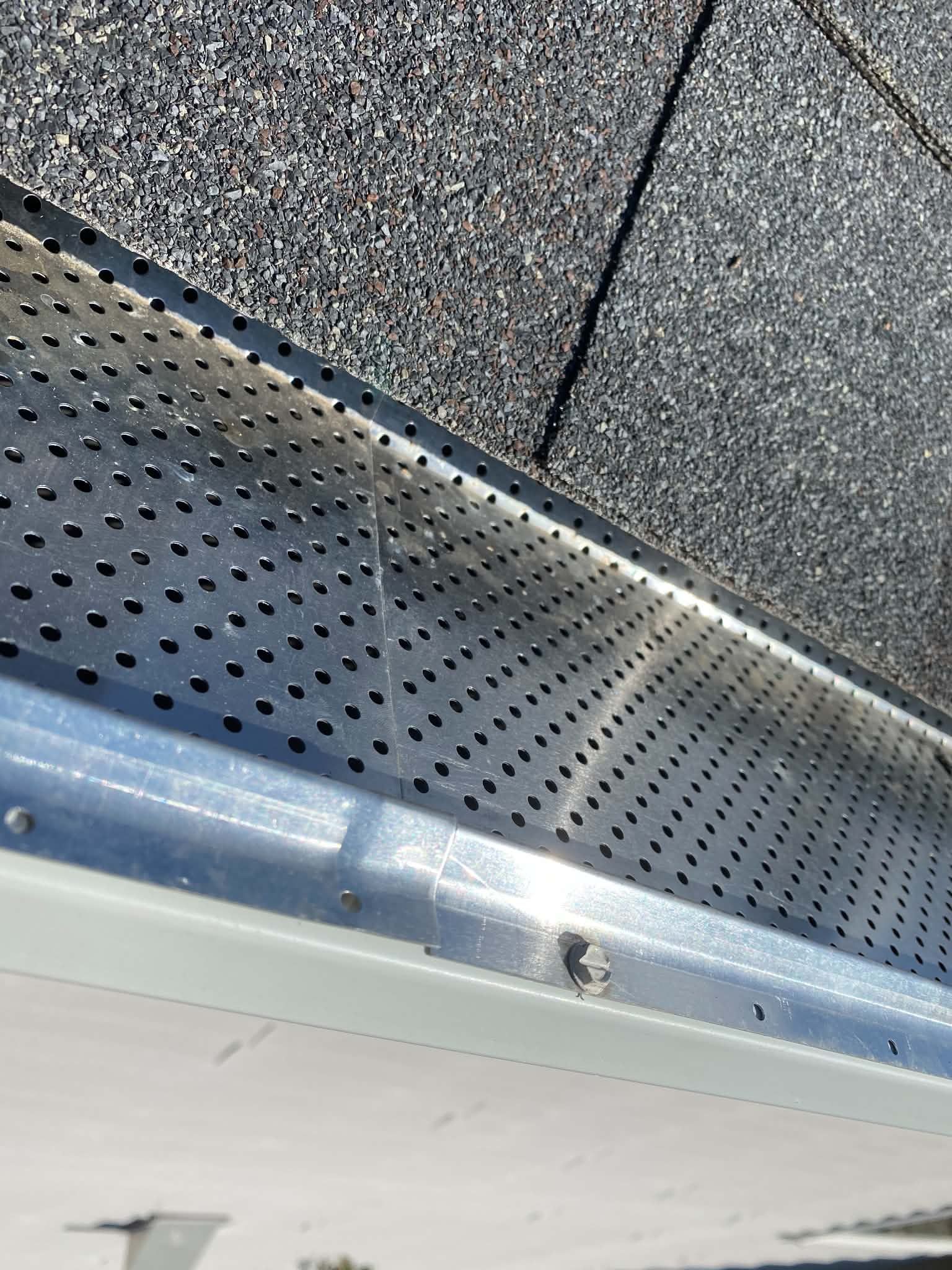
Real Gutter Cover
A cost-effective entry point for homes with moderate tree exposure and manageable debris loads. Heavy-gauge aluminum construction resists the rust that plagues thin snap-in screens sold at hardware stores. Perforated openings are sized to block most leaf debris and seed clusters while maintaining adequate flow capacity during peak rainfall. Professionally installed and secured. Note: like all gutter guards, it needs annual debris maintenance to keep water flowing.
The Real Cost of Skipping Gutter Guards Over Time
Two professional gutter cleanings a year, a realistic minimum for a Willamette Valley home under any tree cover, run between $150 and $300 per visit depending on roof pitch and linear footage. Over five years, that is $1,500 to $3,000 spent to clear the same gutters the same way, with no lasting improvement to the system. A quality guard installation addresses the source of the problem once and keeps working every season after.
What Gutter Guards Protect Beyond the Gutter Itself
When gutters overflow regularly, even once or twice a season, water migrates behind fascia boards, saturates soffit material, and pools at the foundation perimeter. These are not dramatic failures; they are slow ones. Fascia rot, soffit staining, and foundation moisture intrusion each carry repair costs that far exceed the price of a guard system installed before the damage starts. Guards bought as a convenience to pay for themselves as prevention.
42 Years Installing Oregon Gutters
DeMoss & GutterMan LLC since 1984.
Typical Payback in 3–5 Years
Guard cost vs. recurring cleaning fees.
CCB #174358-Licensed & Lead-Safe Certified
Fully credentialed for residential work.
We Stand Behind Every Job.
Our promise on every installation, every time.
Gutter Guard Questions Oregon Homeowners Ask Most
Before investing in a guard system, it helps to know exactly what you are getting, and what you are not. These are the questions we hear most from homeowners across the region.
Do gutter guards actually work in Oregon's heavy rainfall?
Yes, guards rated for high-flow conditions handle Oregon rainfall well when installed correctly. Mesh and cover systems are specifically designed to pass high water volume while shedding debris. The key is matching the guard type to your roof pitch, tree canopy, and gutter width. A professional assessment prevents the mismatch that causes overflow complaints.
Will gutter guards keep needles out of my gutters?
Micro-mesh guards with openings under 50 microns block the fine needles shed by Douglas fir, Western red cedar, and Ponderosa pine. Wide-aperture screen guards do not, needles thread through the holes and accumulate inside. If your property has significant conifer coverage, micro-mesh is the only guard type we recommend.
Can I stop cleaning my gutters entirely once guards are installed?
Most homeowners reduce cleaning dramatically, from two or more visits a year to one. Guards do not make gutters maintenance-free; fine debris accumulates on the guard surface over time, so plan on an annual debris cleanup. That single visit is far less costly than seasonal full cleanings.
How long do gutter guards last on an Oregon home?
Quality aluminum and stainless steel guard systems last 20 years or more when professionally installed. The wet Pacific Northwest climate accelerates rust on inferior zinc-coated or thin galvanized guards, which is why we only install products with coatings and alloys rated for sustained moisture exposure. Proper installation, fully secured, no gaps, is equally critical to longevity.
Do gutter guards affect my roof warranty or gutter warranty?
In most cases, no, guards installed on top of the gutter profile and secured to the front lip do not contact the roof surface and do not affect standard roofing warranties. Guards that slip under shingles for support can create warranty concerns with some manufacturers. We only use installation methods that keep your existing warranties intact.
Do gutter guards help protect my drain fields?
Yes, keeping leaves, needles, and grit out of the gutters means less debris washes down the downspouts and into your underground drain lines and drain fields. Over time, that debris can settle and clog buried drainage systems, leading to costly excavation and repair. Gutter guards reduce the volume of material entering your downspouts, helping keep drain fields clear and functioning properly for longer.
Stop Cleaning Gutters Every Season, Install Guards Once
A gutter guard system from DeMoss & GutterMan LLC is a one-time installation that pays back year after year. We size, select, and install the right system for your specific roof, tree cover, and rainfall exposure, then we stand behind the work. Request a free quote and we will assess your home at no cost.
We Stand Behind Every Job.